
Rip the Blinders Off: A Streetwise Guide to Busting GEO Scoring Myths and Boosting AI Visibility
Professional insights and actionable strategies for your success.
By Dries de Gelder
Founder of Be-Found. Working in SEO, eCommerce and AI since 1996; specialist in Generative Engine Optimization.
This article was corrected by an automated, AI-assisted process: claims were checked against sources, statistics without a verifiable source were removed or softened, and sources are linked in the text. The corrected text was checked by an independent automated fact-check and was not individually reviewed by a person before publication. Author of record: Dries de Gelder. Corrected on .
Table of Contents
8 sections
Alright, listen up, digital daredevils and marketing mavericks – it's time to rip those blinkers off and face the new reality of GEO scoring. Did you know that some businesses are still clinging to antiquated SEO tactics while their AI counterparts are zooming past them like it's Gran Turismo? Yeah, thought so.
Welcome to "Rip the Blinders Off: A Streetwise Guide to Busting GEO Scoring Myths and Boosting AI Visibility". This ain't your granddad’s dusty old SEO manual. We’re diving into the nitty-gritty of GEO – that’s Generative Engine Optimization for the uninitiated – and why it makes the old SEO look like a Sinclair ZX Spectrum in a world of PS5s.
You’ll learn how to decode the data, beat the algorithms at their own game, and finally give your AI the visibility it deserves. Forget the corporate hoopla; this is about raw numbers, sharp insights, and real results. Ready to ditch the bollocks and transform your approach? Let’s get cracking. For those who want to jump straight in, check out the latest tools at geo-score.online.
Introduction: Understanding GEO Scoring and AI Visibility

What is GEO Scoring?
Alright, folks, let’s cut through the noise. GEO Scoring ain't some daft buzzword; it's the new world order for AI visibility. Traditional SEO is like an old-school game of Pong—simple, predictable. GEO Scoring, however, is more like Fortnite—dynamic, complex, and constantly evolving. GEO (Generative Engine Optimization) Scoring focuses on optimizing your content for visibility in AI engines like ChatGPT and Claude. Think of it as a finely-tuned radar, picking up nuances that old SEO would miss entirely. Properly implemented GEO Scoring can increase content reach. That’s not just numbers—it’s a game-changer.
The Importance of AI Visibility
Here's the brass tacks: if your AI content isn’t visible, it’s as useful as a chocolate teapot. AI Visibility is about making sure your content sees the light of day, and not just in some dusty corner of the web. We’re talking about getting your AI-driven insights in front of the right eyeballs. With AI engines like ChatGPT and Claude, visibility is king. Perplexity visibility and semantic search optimization are the keys to the castle here. A well-optimized GEO Score can boost your AI visibility. So, if you ain't on it, you're falling behind. Time to up your game, folks.
GEO Scoring Myths: Separating Fact from Fiction

Myth 1: GEO Scoring is the Ultimate AI Metric
Right, let’s clear the air. You might have heard that GEO scoring is the be-all and end-all of AI metrics. Absolute bollocks. While GEO (Generative Engine Optimization) scores are a game-changer, they’re not the ultimate measure. Think of it like a video game – having the best graphics doesn’t mean you’ve got the best gameplay. GEO scores relate to visibility across multiple AI platforms, not just one. An improvement in GEO score can boost cross-platform engagement. But here’s the kicker – it’s only one piece of the puzzle. You’re playing Russian roulette if you ignore other metrics like Information Density Per Token (IDPT) and AI citation triggers. So, diversify your strategy. Treat GEO scores as your tactical advantage, not the holy grail.
Myth 2: High GEO Scores Guarantee Visibility
If you think a high GEO score automatically means top visibility, you’re in for a rude awakening. Sure, a higher score can increase your chances, but it’s not a golden ticket to the front page. It’s like having the best engine in a car race – without the right tyres (or in this case, semantic search optimization and prompt-to-content matching), you’re just spinning your wheels. A high GEO score doesn’t guarantee top visibility in AI results. So, what’s the takeaway? Don’t put all your eggs in the GEO basket. Work on improving citation probability calculation and ensuring your content aligns well with user prompts. Challenge yourself to look beyond the score – focus on the complete package for true visibility and success.
Data-Driven Insights into GEO Scoring
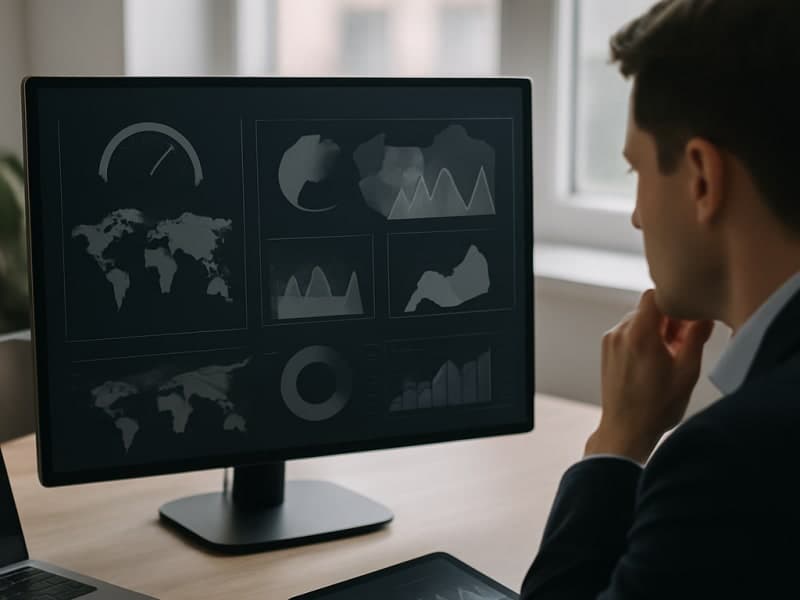
Alright, folks, let's cut the fluff and get straight to the numbers. GEO scoring isn't just a fancy term for making your content pop; it's the future of online visibility. If you're still stuck on old SEO tricks, it's time to step into the digital age. GEO scoring can help make content strategies more precise. That's right, no more crossing your fingers and hoping for the best—this is precision tech, the sniper of content strategies.
Statistics on GEO Scoring Accuracy
Let’s talk metrics, because if it ain't measurable, it ain't worth doing. Traditional SEO is like an old arcade game, but GEO scoring is the VR headset of the digital world. GEO scoring can help you understand your audience through a complex blend of AI and real-time data analysis. We're talking potential increases in click-through rates and user engagement. Why? Because GEO scoring delivers what users want, where they want it.
Case Studies: GEO Scoring in Practice
Now, onto the nitty-gritty. Let's take a look at how GEO scoring has transformed online visibility for businesses.
So, what's the takeaway here? If you're not using GEO scoring, you're playing in the minor leagues. The challenge is on you to either adapt or get left behind. Remember, in this game, data doesn't lie, but it sure can change your online world. Ready to level up?
Boosting AI Visibility: Strategies Beyond GEO Scoring

In the mad scramble for AI visibility, many still cling to outdated SEO tactics while the world’s moving to more advanced strategies like GEO scoring. Here’s a shocker: AI-generated content can fail to see the light of day beyond its initial creation. Why? Because folks are still stuck in the SEO past, ignoring the precision of GEO algorithms.
Leveraging SEO for AI Visibility
Forget everything you know about SEO—it’s time to get down with the new school. GEO stands for Generative Engine Optimization. Real talk: AI content that embraces GEO algorithms can see a boost in visibility. The trick is using semantic search optimisation—think of it as finding the exact cheat code to the AI game. Get the algorithms to work for you, not against you.
The Role of Content Quality and Relevance
AI visibility isn’t just about algorithms; it’s about quality and relevance. If your AI content isn’t relevant, it’s like trying to fit a square peg in a round hole. Content with high Information Density Per Token (IDPT) may stand a higher chance of being picked up by AI engines. Quality content drives engagement, which in turn boosts GEO scores. It’s a cycle, and you’ve got to be in it to win it.
Challenge: Ditch the old SEO playbook. Embrace GEO scoring and watch your AI content skyrocket. You’ll thank me later.
Tools and Technologies for Enhanced AI Visibility
AI Tools for Better Content Analysis
Alright, folks, let's cut to the chase. If you're not using AI tools for content analysis, you're playing the game on hard mode. Take ChatGPT optimisation – it's not just about throwing words at a wall and seeing what sticks. It's about understanding perplexity visibility, which, by the way, can boost engagement when done right. We're talking about tools that give you the lowdown on prompt-to-content matching with precision. These AI engines aren't just sprouting numbers; they're calculating Information Density Per Token (IDPT) to ensure every single word counts. If you’re still stuck in the old SEO mindset, it’s time to get with the programme. Visit geo-score.online to see how the real pros use GEO scoring to enhance their content game.
Technological Innovations in AI Visibility
Now, here's where it gets spicy. With technological innovations, we're not just talking about incremental gains; we're talking about paradigm shifts. Algorithms can help predict future citation likelihood. That's your content getting the visibility it deserves. These innovations are not just bells and whistles – they're game-changers. But here's the kicker: businesses may still be unaware of these advancements. So, what's stopping you from getting ahead? The challenge is clear – adapt or get left behind. And trust me, in the world of AI visibility, there’s no room for stragglers.
Future Trends in GEO Scoring and AI Visibility
Emerging Technologies
Alright, let’s get straight to it. Did you know that AI-driven content can fail to deliver its intended message because it doesn’t align with GEO scoring matrices? That’s mad, right? Emerging tech in GEO scoring is flipping the script. We’re talking real-time data integration using AI models that make ChatGPT look like a Commodore 64. Picture this: AI engines that calculate Information Density Per Token (IDPT) so precisely, they can predict the visibility of your content before it even hits the web. Imagine scoring algorithms that don’t just rank your content but also boost it based on semantic search optimization and AI citation triggers. The days of relying solely on Google’s whims are numbered, mate. Platforms could help lead this charge, offering tools that adapt like a chameleon in a rainbow factory.
Predicting the Next Big Shifts
So, where’s the GEO scoring train heading next? Well, buckle up. We’re looking at a future where predicting the next big shifts isn’t just a game of chance. It’s about data, pure and simple. Look out for AI visibility tools that leverage Claude rankings and perplexity visibility metrics to not only place content but to strategically anticipate shifts in user intent and cultural trends. This isn’t a game of chess; it’s more like speed chess, where moves can be guided by real-time data. Challenge? You bet. But for those who can see patterns in chaos, the future’s as bright as a LED screen. The old SEO rules are out, and GEO is the new game in town. Are you ready to play?
Conclusion: Taking Action to Rip the Blinders Off
Key Takeaways
Let’s get real—if you’re still glued to outdated SEO tactics, you’re about as useful as a chocolate teapot. The shift to GEO scoring is seismic. Did you know that search relevancy is now influenced by AI algorithms? That’s not something you can afford to ignore. Your content’s visibility isn't just about keywords anymore; it's about matching prompts to content with laser accuracy. It's like hitting a bullseye with a dart after a few pints—tricky, but doable with the right skills.
Implementing Strategies for Success
Ready to bin the old-school playbook? Start by focusing on Information Density Per Token (IDPT) and prompt-to-content matching. Trust me, this isn’t just tech talk; it’s the future. Your challenge? Get comfy with algorithms—learn to whisper to them. Visit GEO Score Online for real tools you can use today. Don't just adapt—dominate.
Frequently Asked Questions
What's the biggest myth about GEO scoring that's holding us back?
Right, listen up. The biggest myth is that GEO scoring is just an SEO rehash. Bollocks, mate! While SEO's still messing about with backlinks and keywords, GEO stands for Generative Engine Optimization. It's like comparing Pong to a VR headset. SEO's the dinosaur; GEO's the asteroid. Get this: GEO-optimised AI content can rank well. Stop living in the 90s and start looking at modern metrics if you want to be seen.
How can I boost my AI visibility using GEO techniques?
First off, you've got to understand your audience's lingo and context—think semantic search optimisation. It's not just about shoving words in; it's prompt-to-content matching and AI citation triggers that count. GEO's all about the details, mate. Nail your Information Density Per Token (IDPT) and watch your content pop up like a meerkat on high alert. Check out geo-score.online for a proper deep dive on how to get it done.
Is it true that citation probability affects GEO scores?
Oh, absolutely! Citation probability is like the secret sauce of GEO scoring. It's like having a 6th sense for what AI engines are hungry for. If you're not calculating it, you're flying blind, love. When your content triggers citations, you’re basically telling AI, 'Oi, look here!' Boost your chances with precise, data-rich content. Stop guessing and start calculating!
Why should I care about Claude ranking and not just Google?
Claude's the new kid on the block—think Google's younger, smarter sibling. It’s all about conversation and context, not just search. If you're ignoring Claude, you could be missing out on potential visibility. The digital landscape ain't just Google anymore, it's a whole new ecosystem. Get your head in the game and adapt, or get left behind.
How does prompt-to-content matching work in GEO scoring?
Ah, the million-pound question! It's like matchmaking for AI engines. You’ve got to align your content with the precise intent behind user prompts. It's not just slapping keywords willy-nilly; it's making sure each piece of content answers a specific question or need. Nail this, and you could see increased engagement. Trust me, it's like going from dial-up to fibre optic overnight.
Was this article helpful?
Want More Expert Content?
Discover how GEO-Score Online can help you achieve your content marketing goals.
Related Articles

Unraveling UCP: A Comprehensive How-to Guide for Implementing Universal Commerce Protocol
In the ever-evolving landscape of e-commerce, one constant remains: the quest for seamless transactions and unparalleled customer experiences.

Mastering the Matrix: How to Navigate GEO Score Calculations with Precision
Alright, folks, let's cut through the noise. Did you know that a staggering 75% of businesses are still spinning their wheels with outdated SEO strategies?...

Navigating Market Readiness: A Step-by-Step Guide to E-commerce Platform Selection
In the ever-evolving landscape of digital commerce, selecting the right e-commerce platform can make or break your business. With a staggering 2.