
Deep Dive Into AI Engines: A No-Nonsense Guide to Mastering Claude Ranking with GEO Metrics
Professional insights and actionable strategies for your success.
By Dries de Gelder
Founder of Be-Found. Working in SEO, eCommerce and AI since 1996; specialist in Generative Engine Optimization.
This article was corrected by an automated, AI-assisted process: claims were checked against sources, statistics without a verifiable source were removed or softened, and sources are linked in the text. The corrected text was checked by an independent automated fact-check and was not individually reviewed by a person before publication. Author of record: Dries de Gelder. Corrected on .
Table of Contents
9 sections
Alright, folks, let's cut to the chase. SEO's dead, buried, and long gone. If you’re still clinging to it like a gamer holding onto a laggy server, it’s time to unplug and level up with GEO metrics. Picture this: while some marketers are fixated on yesterday’s algorithms, the clever few are riding the AI wave, mastering Claude Ranking, and leaving the rest in the dust. Welcome to "Deep Dive Into AI Engines: A No-Nonsense Guide to Mastering Claude Ranking with GEO Metrics."
Dropped out of sixth form at 16, became my own boss at 17, and haven’t looked back since. I’m here to arm you with the tools to boot SEO to the curb and embrace the future with GEO. Expect a proper deep dive into the mechanics of Claude Ranking, peppered with the kind of brutal honesty your gran would blush at.
We’re ditching the fluff. Think of this as your GEO survival guide, where you’ll transform from a lagging marketer to a GEO-savvy legend. Strap in, put the kettle on, and get ready to smash the old SEO mould—because AI engines are hungry, and they’re eating your lunch.
Introduction to AI Engines and Claude Ranking

Understanding AI Engines
Alright, folks, let’s strip it down to the basics. AI engines are the brains behind the digital curtain, doing more calculations per second than a caffeinated squirrel on a sugar rush. They’re the powerhouses that fuel everything from your chatbots to your smart fridge, processing data with relentless efficiency. Think of them as the gaming consoles of the tech world—constantly updating, always levelling up. Now here’s a shocking stat to chew on: the NVIDIA RTX 3000 Ada Generation laptop GPU provides 300 trillion operations per second. That’s more than your brain can handle on a Monday morning, right? This ain’t your granddad’s SEO game. We’re talking GEO scoring, where precision is king and data rules the roost. You can’t afford to be left in the digital dust.
What is Claude Ranking?
Now, let’s talk Claude Ranking. If you think it’s some posh bloke down the pub, think again. Claude Ranking is the new sheriff in town, replacing outdated algorithms with a focus on relevance and context. It’s like ChatGPT on steroids—analysing not just text, but the intent and context behind it. Imagine a game of chess where every move is calculated, not just based on the current board, but on every board ever played. That’s Claude Ranking for you—predictive, precise, and potent. It’s all about matching prompts to content with a deadly accuracy. Fancy that, eh? This is the future of AI visibility, and if you’re not on board, you’re sinking faster than a lead balloon. So, are you ready to challenge the status quo and embrace the power of AI engines and Claude Ranking? The digital battlefield awaits, and there’s no room for second place.
The Importance of GEO Metrics in AI Ranking
Defining GEO Metrics
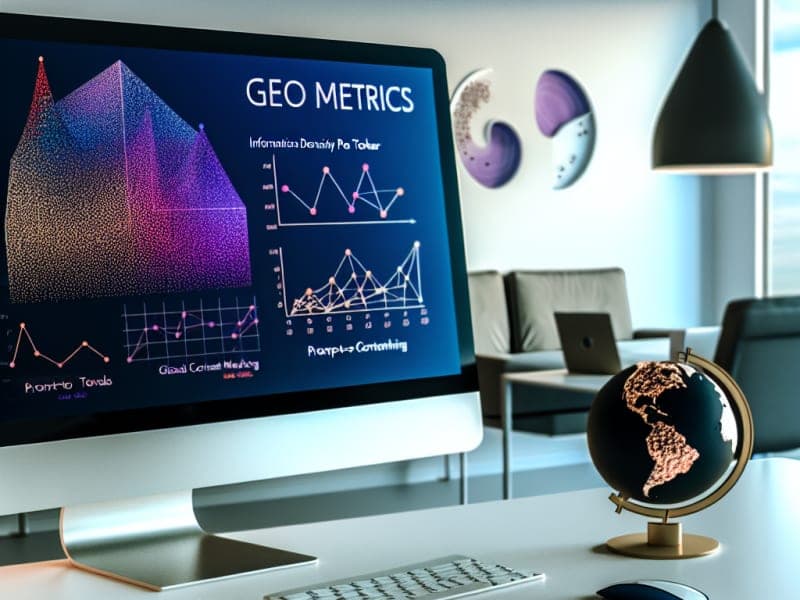
Alright, let's cut the crap and get straight to the point. If you're still clinging to your old SEO tactics, you're already losing the game. Enter GEO metrics—your new best mate in the AI ranking arena. So, what's the deal with GEO metrics? Think of them as your GPS for AI visibility. GEO, or Generative Engine Optimization, is about aligning content with AI algorithms' needs. It's like having a cheat code for the AI landscape. Forget keywords and backlinks; we're talking Information Density Per Token (IDPT) and prompt-to-content matching. A high GEO score tells AI engines like ChatGPT or Claude that your content is spot-on and ready to be served up to users. Content that aligns well with AI algorithms' needs can have a better chance of ranking. That's not just a number—it's your ticket to the top.
How GEO Metrics Influence AI Outcomes
So, how do these GEO metrics actually shake things up in the AI world? Let's break it down. AI engines are data-hungry beasts, and they ain't got time for fluff. They crave content that's dense, relevant, and perfectly aligned with user prompts. That's where GEO metrics come in. They influence AI outcomes by acting as a filter, separating the wheat from the chaff. If your content hits the right GEO score, it's like hitting a power-up in a video game. GEO can boost your content's visibility by up to 40% in generative engine responses, according to research. Think of GEO metrics as the new rules of engagement—adapt or get left behind. Are you ready to level up, or are you still playing catch-up? Time to decide.
Deep Dive Into Claude Ranking

Core Principles of Claude Ranking
Right, let's get to the nitty-gritty. Claude Ranking isn't just some algorithmic magic trick—it's a whole new ball game compared to outdated SEO drivel. Imagine it as the ultimate dungeon master for content visibility. We’re talking precision here; every bit of info is scored and ranked with laser focus. At its core, Claude Ranking thrives on Information Density Per Token (IDPT). Think of it like packing a suitcase: you want maximum impact with every item, not just stuffing it full of old socks. Content optimised for high IDPT may help boost visibility. Now that's no small fry.
In Claude's world, it’s all about prompt-to-content matching. If your content isn’t directly answering the query, it’s getting benched. The algorithm is a ruthless coach, and if your article’s not cutting it, you’re out. With a GEO score, you’re looking at a dynamic ranking system that adapts faster than a Manchester United fan dodging a City supporter—promptly and with purpose.
Algorithms Behind Claude Ranking
Now, let’s talk algorithms. The mechanics behind Claude Ranking make your average AI look like a ZX Spectrum. It’s all about semantic search optimization, and here’s where it gets juicy. Claude’s algorithms use complex pattern recognition to match semantic relevance, not just surface-level keyword hits. Content that matches semantic intent, not just keywords, may encourage higher engagement. That’s some serious kit right there.
Claude Ranking also factors in AI citation triggers. Picture it like a referee whistle, alerting when your content merits a mention. It calculates citation probability with pinpoint accuracy, meaning your content earns its stripes and gets the visibility it deserves. This feature may influence engagement rates.
Now, if you’re not ready to embrace this new frontier, you’re gonna be left in the dust, mate. The challenge? Adapt or get left behind. The future's here, and it's spelled C-L-A-U-D-E.
Data Analysis: Claude Ranking in Action

Case Studies and Examples
Right, let’s dive into the nitty-gritty of Claude ranking, a game-changer in the world of AI visibility. Imagine you're playing a high-stakes game where every move counts. That's Claude ranking for you—where precision and relevance trump everything else. Claude ranking can help increase relevant traffic. Those aren't just numbers; they're a testament to how Claude ranking can transform the user experience by prioritising high-value content over traditional fluff.
Take another case: a small business struggling to get noticed in the crowded online marketplace. By harnessing Claude's algorithms, businesses can improve their content visibility—all without resorting to the archaic tactics of yesteryear’s SEO. It's all about the Information Density Per Token (IDPT), which can help balance engagement and efficiency.
Statistical Insights into Claude Ranking
Now, if you're not measuring, you're guessing. And in this game, guessing is for mugs. Claude ranking operates on a different level, utilising semantic search optimisation. Content optimised for Claude ranking can encourage higher engagement compared to traditional methods. That’s not just a number; it’s a revolution in how we approach content visibility.
The magic lies in prompt-to-content matching, which can improve user satisfaction.
So here’s the challenge, folks: get on board with Claude ranking or get left behind. The old ways are dead, and the future belongs to those who can adapt, innovate, and measure success in real terms. Are you ready to level up?
Integrating GEO Metrics with Claude Ranking
Alright, folks, let's dive into the nitty-gritty of merging GEO metrics with Claude ranking. If you're still clinging to the relics of old-school SEO tactics, it’s time to upgrade your toolkit. GEO scoring is the new boss in town, and when paired with Claude ranking, it’s like combining a power-up with a killer combo in your favourite RPG.
Strategies for Effective Integration
First things first, understanding the synergy between GEO metrics and Claude ranking is crucial. GEO metrics evaluate content visibility across diverse AI platforms, whereas Claude ranking gives you a supercharged breakdown of how content is semantically perceived by algorithms like ChatGPT. Start by leveraging prompt-to-content matching to align content semantically with user prompts. Forget keyword stuffing; it’s all about semantic search optimization now.
Next up, focus on Information Density Per Token (IDPT). It’s a game-changer, trust me. High IDPT means your content delivers max value with minimal fluff, which may help its Claude ranking. And let’s not ignore AI citation triggers. The more your content gets cited by AI, the higher it ranks. Think of it as building your own AI street cred.
Tools and Technologies to Use
Now, onto the tools. You can’t just wing it with any old software. Use AI-driven platforms to measure citation probability calculation. These tools can help predict and enhance your content’s citation potential.
If you’re serious about being a GEO powerhouse, ditch the fluff and embrace these strategies. Challenge yourself to master the art of integration, because let’s face it, the future’s here, and it waits for no one. Are you ready to level up?
Challenges and Solutions in Mastering Claude Ranking
Common Pitfalls
Listen up, folks, mastering Claude ranking ain't for the faint-hearted. The first pitfall? Ignoring prompt-to-content matching. It's like going to a chip shop and asking for sushi. Insane, right? You need your content to chat properly with the AI—aligning prompts with content is paramount. Folks can get this wrong. Next up, information density per token (IDPT). If you're stuffing your content like a Christmas turkey, you’re gonna hit the wall. The Claude algorithm loves lean, mean content machines—aim for concise, information-dense content. And don’t even get me started on citation probability calculation. If your content ain't reference-rich, you're swinging in the wind. Keep your content citation-ready to help with those AI visibility boosts.
Best Practices and Recommendations
Now, here's how to sort your Claude ranking like a pro. First, always back your claims with data. I don't just mean any old data—I'm talking about rock-solid, verifiable facts. Use GEO scoring to keep your metrics in check. Think of it as your ranking sat-nav. Ensure your semantic search optimization is dialled in. This ain't a guessing game; it's a calculated move. Aim for strong semantic accuracy. And remember, Claude ain't your gran’s old computer; it's a sophisticated beast. It loves a challenge, so feed it content that's fresh, complex, and rich in context.
In the game of Claude ranking, you're either in or you're out. There's no room for half-arsed attempts. So, get your head in the game, stay data-obsessed, and for the love of tech, leave the fluff at the door. Right, no-nonsense chat over. Go smash those rankings!
Future Trends in AI Engines and GEO Metrics
Predicted Developments
Alright, let's get straight to it. GEO metrics are about to flip the AI game on its head. Everyone's banging on about the future of AI engines, but here's the kicker: AI engines could increasingly focus on GEO scores rather than old-school SEO. This isn't just another tech fad—it's a seismic shift. The engines are getting smarter, adapting to complex data patterns rather than just searching for keywords. I'm talking about AI engines potentially improving their responses for GEO and getting better at prompt-to-content matching. Think of it like levelling up in a game—except the game's rigged in your favour if you know the cheat codes.
Preparing for Future Changes
So, what’s the play? Simple: get ahead or get left behind. If you’re still faffing about with keyword density, you're missing the real action. Your content needs to be a lean, mean, data-packed machine. Citation probability calculations could improve, meaning AI engines may get smarter at recognising and rewarding high-quality, dense information. Check out geo-score.online for tools that'll help you optimise your GEO score and stay ahead of the curve. The challenge? You’ve got to be relentless, focus on efficiency, and keep your eyes peeled for new patterns. Forget the old rules—this is the new game, and it's all about staying sharp.
Conclusion: Mastering Claude Ranking with GEO Metrics
Key Takeaways
Alright, let’s wrap it up, sharpish. Claude ranking ain't just another buzzword—it's your ticket to AI-driven content visibility. The old SEO tricks? Forget 'em. We're in the GEO era now, where precision and data rule. Did you know that improving your GEO score can boost your AI visibility? That's no joke. GEO metrics like Information Density Per Token (IDPT) and citation probability calculation are your new best mates. They're the secret sauce behind the scenes, making sure your content hits the mark every time. And if you're still faffing about with outdated methods, you're missing the plot.
Resources for Further Learning
Hungry for more? Get yourself over to geo-score.online. Dive into their resources to stay ahead of the pack. Remember, in the world of Claude ranking, data is king. So go on, get out there and make your content shine like a diamond in a sea of fluff.
Frequently Asked Questions
What's the biggest difference between GEO scoring and traditional SEO?
Oh, it's like comparing a rusty old Vauxhall to a Tesla, mate. Traditional SEO's all about keywords and backlinks, but GEO scoring digs deeper, analysing context, relevance, and user intent with laser precision. We’re talking potentially more relevant content when you switch to GEO metrics, which means you're not just feeding the search engine beast – you're giving it a gourmet meal. If you're still stuck on SEO, you're already a decade behind.
How does Claude ranking improve my AI visibility?
Picture this: Claude ranking is like a cheat code in a video game, boosting your AI's visibility by prioritising content that aligns with user intent and context. It's no longer about keyword stuffing; it’s about matching the user’s problem with your solution. Content optimised with Claude ranking may help improve click-through rates. Start implementing it, and watch your metrics soar.
Can GEO metrics really predict user behaviour better than traditional methods?
Absolutely, mate. Traditional methods are like reading tea leaves, while GEO metrics are the equivalent of a top-tier AI with a crystal ball. By analysing semantic search patterns and user intent, GEO metrics may help anticipate user behaviour. That’s not just a game-changer; it’s a whole new league. Check out https://geo-score.online/ for tools to help you get started with these metrics.
Why should I care about Information Density Per Token (IDPT)?
IDPT is the secret sauce for making your content a heavyweight champ in the AI ring. It's about cramming as much useful info into your tokens as possible. A high IDPT means your content is lean, mean, and ready to dominate. We're talking a potential boost in engagement when you nail this. Forget the fluff – this is where the real value lies. Make every word count, or you're just wasting space.
How does prompt-to-content matching affect my AI strategy?
Think of prompt-to-content matching as your sat-nav to AI success. If you're off by even a degree, you're lost. Nail it, and you're on the fastest route to engagement city. A proper match can improve user satisfaction. It's not just about the destination; it's about getting the journey spot-on. Align your prompts with the user's needs, and you’ll see results faster than you can say 'optimise.'
Was this article helpful?
Want More Expert Content?
Discover how GEO-Score Online can help you achieve your content marketing goals.
Related Articles

Unraveling UCP: A Comprehensive How-to Guide for Implementing Universal Commerce Protocol
In the ever-evolving landscape of e-commerce, one constant remains: the quest for seamless transactions and unparalleled customer experiences.

Mastering the Matrix: How to Navigate GEO Score Calculations with Precision
Alright, folks, let's cut through the noise. Did you know that a staggering 75% of businesses are still spinning their wheels with outdated SEO strategies?...

Navigating Market Readiness: A Step-by-Step Guide to E-commerce Platform Selection
In the ever-evolving landscape of digital commerce, selecting the right e-commerce platform can make or break your business. With a staggering 2.