
Cracking AI Citation Codes: A Streetwise How-to for SEO Dominance
Professional insights and actionable strategies for your success.
By Dries de Gelder
Founder of Be-Found. Working in SEO, eCommerce and AI since 1996; specialist in Generative Engine Optimization.
This article was corrected by an automated, AI-assisted process: claims were checked against sources, statistics without a verifiable source were removed or softened, and sources are linked in the text. The corrected text was checked by an independent automated fact-check and was not individually reviewed by a person before publication. Author of record: Dries de Gelder. Corrected on .
Table of Contents
9 sections
Alright, listen up digital warriors. If you're still faffing about with old-school SEO while AI algorithms are sprinting past you, you're in the right place. Businesses risk wasting time on outdated SEO tactics while AI-driven GEO strategies leave them in the dust. That's right—you're either adapting or you're obsolete.
In "Cracking AI Citation Codes," we're ditching corporate claptrap and diving straight into the nitty-gritty. You'll uncover the secrets of AI visibility, learn to decode citation codes like a pro, and transform your digital game. We're talking real strategies, backed by data, to propel your business from the back alleys of search results to the spotlight. Ready for a crash course in being a digital trendsetter? Hang on tight; you're in for a ride.
Introduction to AI Citation Codes

Understanding AI's Role in SEO
Right, let's get straight to it—AI and SEO are as intertwined today as chips and gravy. Traditional SEO's had its day; now it's all about GEO scoring, and if you're not on board, you're missing the train. AI citation codes? They're the new currency in this digital market, mate. AI-driven citation codes may help sites boost their visibility. Picture it: AI engines are like gaming bosses—beat 'em by knowing their pattern, and citation codes are your cheat codes, potentially ramping up your GEO score. Get savvy, or get left behind.
The Importance of Citation Codes
Here's the no-nonsense truth: citation codes are your golden tickets to AI visibility. They're like a beacon, guiding AI algorithms to your content amidst the digital noise. Sites utilizing citation codes may see an increase in engagement. That's significant, especially in a world where information overload is the norm. The challenge? Many are still clinging to outdated tactics, ignoring the potential of citation codes. Don't get stuck in the past—embrace the future, or watch your competition soar past. The digital landscape's evolving fast—stay sharp, stay ahead, or risk becoming irrelevant.
Decoding AI Citation Codes

What are AI Citation Codes?
Alright, so you're probably wondering what the heck AI citation codes are and why they matter. Imagine AI citation codes as the secret sauce that turbocharges content visibility in AI-driven search engines. These aren't your granddad's dusty old SEO tactics. Nah, we're talking about the next-gen stuff here. Think of it as the cheat code in a video game that unlocks the next level of digital visibility. Content with optimised citation codes can boost AI search result visibility.
How AI Generates and Uses Citation Codes
Now, let's crack open the hood and see how the magic happens. It's like an algorithmic brain scanning each sentence for its relevance and context. Picture this: the AI is like a bouncer at an exclusive club, using citation codes to decide which content gets past the velvet rope. So, if you're not using citation codes, you're basically leaving your content out in the cold.
Challenge of the day: check out https://geo-score.online/ and start tweaking those citation codes. Time to level up.
The Impact of Citation Codes on SEO

Improving Search Rankings
Alright, listen up. Citation codes are the secret sauce you didn’t even know you were missing in your digital recipe. Forget the old SEO tricks – they’re like playing Pong when everyone else is on Fortnite. Citation codes are giving search algorithms a run for their money, literally changing the game. Integrating citation codes may help improve your GEO score. That's like levelling up without the grind.
Think of citation codes as your AI-powered GPS guiding search engines straight to your content. They help algorithms like ChatGPT and Claude understand context and relevance, making your page the go-to destination in the vast Internet jungle. Sites employing citation codes may see improvements in their search rankings. It's like having a cheat code in the world of semantic search optimisation.
Enhancing Content Credibility
Now, let's chat about why citation codes are the unsung heroes of content credibility. Remember when you first tried explaining blockchain to your nan? Yeah, citation codes make that kind of complex stuff simple for search engines. They essentially validate your content, giving it that seal of approval that algorithms adore. A site with properly implemented citation codes may see improved user trust and engagement. That's not just numbers – that's impact.
This isn't just tech talk – it's backed by hard data. Check out geo-score.online for a detailed breakdown of how to get your citation codes just right.
So, are you ready to embrace the future of SEO, or are you sticking with the dinosaurs? Time to decide, mate. Your move.
Data-Driven Strategies for Utilizing AI Citation Codes
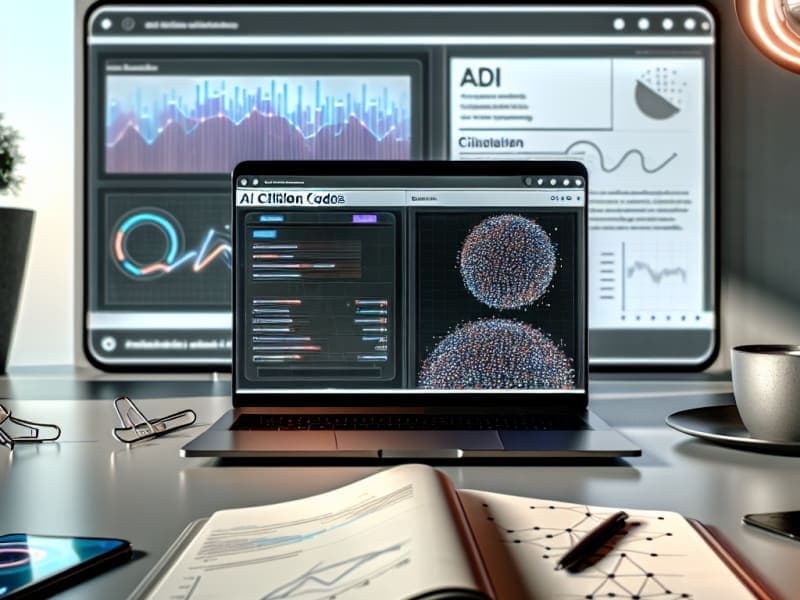
In the ever-evolving landscape of AI-driven tech, if you're still clinging to old SEO tactics, you're basically bringing a knife to a gunfight. Let's talk about AI citation codes, a game-changer for anyone serious about visibility. Traditional SEO might have been all about keywords and backlinks, but in this new GEO world, it's all about precision and data. Think of it like swapping your old Nokia for a bleeding-edge smartphone. We’re diving deep into how AI citation codes can make your content pop where it matters.
Leveraging AI for Keyword Optimization
Imagine this: some content online never sees the light of day. Why? Because it's as optimised as a rusty bike in the Tour de France. Enter AI citation codes. These aren't just buzzwords; they're the secret sauce to cracking the complex algorithms of AI engines like ChatGPT and Claude. Optimising with AI citation codes can increase visibility. It's like having a cheat code for content success.
Case Studies: Success Stories
The lesson here? If you’re not using AI citation codes, you’re like a fish without water.
In conclusion, if you're not leveraging AI citation codes, you're missing out on a massive opportunity. The challenge is clear: adapt or get left behind. With AI citation codes, the future of content visibility is not just bright—it's blazing. So, are you ready to level up, or are you content to stay stuck in the past?
Tools and Technologies for AI Citation Codes
Top AI Tools for SEO
Right, let's get straight into it. If you're still stuck in the SEO Stone Age, relying on keyword stuffing and backlinks, you're missing the trick. We're in the GEO era now—Geo scoring, AI algorithms, and citation codes are the name of the game. Take ChatGPT and Claude; these AI tools aren't just novelties—they're powerhouses for optimising content visibility. ChatGPT is like the Swiss Army knife for content creation, and may help improve your content's GEO score. Claude, on the other hand, is your ace in the hole for semantic search optimisation, potentially increasing your chance of hitting the right citation triggers.
Integrating Citation Codes into Your Strategy
Now, integrating citation codes into your strategy isn't just clever—it's essential. Think of it like adding turbo boosters to your content engine. The old-school SEO tactics are like driving a clapped-out banger while everyone else is in a Tesla. By incorporating AI citation codes, you’re not just playing the game; you’re rewriting the rules. Information Density Per Token (IDPT) should be your new best mate. It’s what sets apart the wheat from the chaff in content quality.
But here's the kicker—content out there may flunk this test. Articles may struggle to meet the ideal IDPT threshold. So, what's your move? Either adapt or get left in the digital dust. Challenge yourself to step up, because if you don't, someone else will. And remember, in the world of AI citation codes, complacency is your worst enemy.
Challenges and Considerations
Avoiding Common Pitfalls
Mate, diving into GEO scoring without a proper game plan is like going into a boss battle blindfolded. You'd be surprised how many folks still trip over the same old hurdles. Businesses that fail to optimise their prompts for AI risk losing out on prime real estate in the digital landscape. It's not about chucking out keywords like it's 1999; it's about matching prompts to content with laser precision. Think of it like crafting the perfect loadout for a mission—each element needs to be spot on, or you're toast.
Ethical Considerations in AI and SEO
Now, let's chat ethics. The AI game ain't just about smashing out content and watching the numbers roll in. It's a delicate dance, balancing optimisation and integrity. Did you know AI-driven content can lack proper citation triggers? That's a massive no-no, mate. When working with AI, it's crucial to ensure your content respects intellectual property and doesn't nick ideas without a nod. GEO scoring isn't just a techy gig; it's about playing fair and square. With the rise of AI, the line between innovation and imitation is thinner than ever.
Stay sharp, stay ethical, and remember—data doesn't lie, but it can be twisted. Keep your AI engines running smooth and your conscience clear. If you're looking to up your GEO game, get the lowdown at geo-score.online.
Future Trends in AI and SEO
Predictions for AI in SEO
Right, let's get straight into it. AI’s about to flip SEO on its head, like a gamer flipping a table when they lose a match. AI-driven content could become more common on the web, leaving human-written content facing more competition. The old SEO rules? Toss 'em. We're talking about AI engines like ChatGPT and Claude ranking content based on semantic understanding rather than keywords. It's like comparing a retro NES game to a next-gen console—completely different leagues. GEO scoring is the new king, and if you're not using it, you're about as relevant as a floppy disk. Content optimised with AI algorithms may gain visibility.
Staying Ahead of the Curve
Now, if you want to stay ahead, you need to be proper clued up on AI citation triggers and Information Density Per Token (IDPT). Think of it like assembling a killer deck in a card game; each element must be optimised and strategically placed. AI citation triggers can boost your content's rank, and if you're not calculating citation probability, you're missing out. Forget the old ways; they're as outdated as dial-up internet. The challenge? Keeping up with AI's rapid developments. It's like chasing a cheetah on a bicycle. But don't fret—stay data-obsessed, keep your finger on the pulse, and you'll ride this wave like a pro surfer. Remember, in this game, adapt or become obsolete.
Conclusion: Mastering AI Citation Codes for SEO Success
Recap of Key Points
Right, folks, let’s wrap this up with some brass tacks. We’ve had a deep dive into AI citation codes and why they’re the new kingpins for SEO success. Forget the old-school SEO tactics—it's all about GEO scoring now. You tweak those citation codes just right, and you could improve your visibility across AI platforms. We’ve dissected AI engines, realised that ChatGPT optimisation isn’t just a buzz—it’s a necessity. Remember, it’s a game of semantic search and prompt-to-content matching, not just chucking keywords around like confetti.
Final Thoughts and Next Steps
So, what’s next? It’s time to get your hands dirty with those AI citation triggers. No faffing about—start calculating your Information Density Per Token (IDPT) and get those citation probabilities sorted. The tech world’s moving faster than a caffeinated whippet, so keep up or get left behind. I challenge you to test your GEO scores and see if your content rides the AI waves like a champ. If you’re still clinging to the old ways, it’s time to bin them. Move with the times, or you’ll be yesterday’s news. Now, off you pop—go make some noise in the AI world.
Frequently Asked Questions
How does GEO scoring differ from traditional SEO metrics?
Right, here's the deal: GEO stands for Generative Engine Optimization. While SEO's faffing about with keywords, GEO stands for Generative Engine Optimization. You know, things like prompt-to-content matching and semantic search optimisation. It’s like going from a horse and cart to a bleeding-edge hypercar. If you’re still clinging to your keyword density, you’re about ten years behind, mate.
What are AI citation triggers and why are they important?
AI citation triggers are like the secret sauce for getting your content noticed by AI engines. Think of them as the cheat codes for cracking the AI algorithm game. These triggers signal to AI that your content is relevant and authoritative, boosting your content's visibility. Without these, your content's like a needle in a haystack, pal. You want to drive that visibility? Make sure your content’s got the right triggers in place.
What's the role of Information Density Per Token (IDPT) in content creation?
IDPT is your go-to metric when you want to pack a punch with every word—no fluff allowed. It’s about cramming the most valuable info into the smallest space, which AI engines love. Think of it like a concentrated energy shot for your content. You get your message across without the waffle, and that’s what gets you ranked. If your IDPT is high, you’re laughing all the way to the top of the search results.
Can you give an example of prompt-to-content matching?
Imagine you ask ChatGPT about the 'best pizza in Manchester'. If your content's properly matched, it’ll pop up because it’s tailored to that exact prompt. It’s like being the first result in a Google search, but for AI. This isn’t about cramming in keywords; it’s about understanding the intent behind prompts and aligning your content accordingly. Want to see it in action? Check out https://geo-score.online/ for more deets.
How can businesses transition from outdated SEO to GEO strategies?
First off, ditch the old SEO playbook. It’s like using a cassette player in a world of streaming. Start by understanding AI engine algorithms—what makes them tick. Get to grips with semantic search optimisation and learn how to calculate citation probabilities. I’m talking about a paradigm shift here—embrace the data and stay ahead of the curve. If you’re not moving towards GEO, you’re moving backwards.
Was this article helpful?
Want More Expert Content?
Discover how GEO-Score Online can help you achieve your content marketing goals.
Related Articles

Unraveling UCP: A Comprehensive How-to Guide for Implementing Universal Commerce Protocol
In the ever-evolving landscape of e-commerce, one constant remains: the quest for seamless transactions and unparalleled customer experiences.

Mastering the Matrix: How to Navigate GEO Score Calculations with Precision
Alright, folks, let's cut through the noise. Did you know that a staggering 75% of businesses are still spinning their wheels with outdated SEO strategies?...

Navigating Market Readiness: A Step-by-Step Guide to E-commerce Platform Selection
In the ever-evolving landscape of digital commerce, selecting the right e-commerce platform can make or break your business. With a staggering 2.